
Do you want to travel as a student without spending a lot of money or missing out on amazing experiences?
I traveled to places in South America, Asia, Europe, and Australia when I was in college, and it wasn’t because I had a ton of money (I definitely did not). I found ways to travel with little to no money, and I’m here today to show you exactly how to do the same.
In this article, I’m sharing:
- Ways to travel on a super tight budget
- Cheapest places to travel as a student
- Most underrated places to travel
- Best places for college students to travel
And more!
Recommended reading: 11 Travel Jobs That Come With Free Housing
How To Travel on a Student Budget Without Missing Out
This article shows exactly how I traveled internationally as a college student with little money – without missing out on experiences.
1. Be flexible
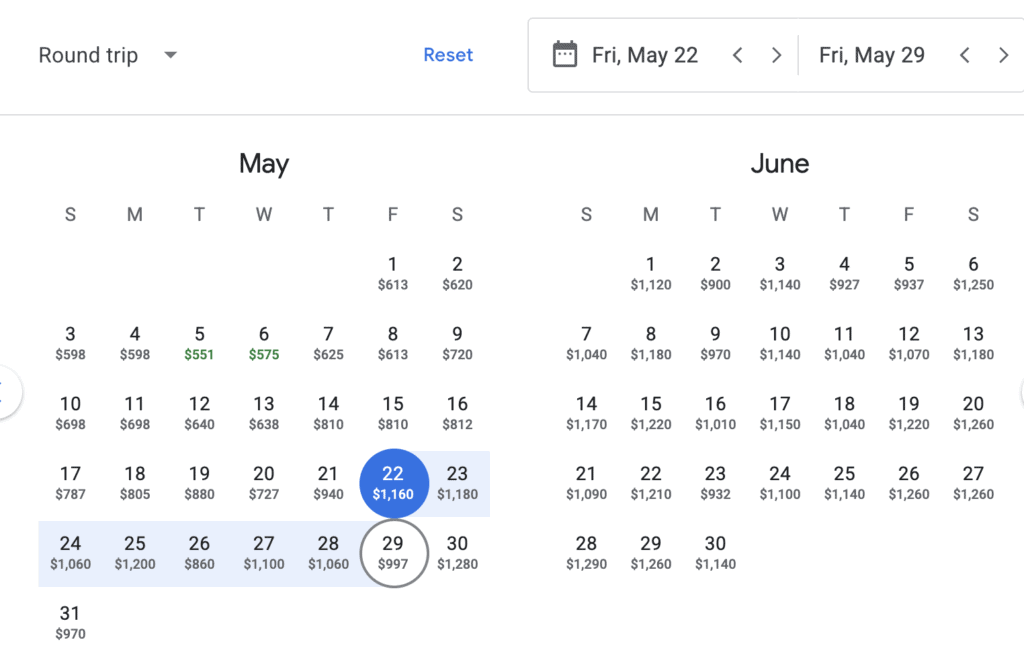
Being flexible with your travel plans can really save you some money. Even small date or destination changes can save you hundreds of dollars on flights and accommodations, which adds up fast on a student budget.
For example, let’s say you’re set on going to Paris from May 22 through May 29. You put those dates into Google Flights, and it says $1,160 for a round-trip ticket.
Without being flexible and looking at other dates, you wouldn’t have any idea how much money you could be saving.
Shifting your travel dates by just 10 days earlier can lead to huge savings. So a flight that was once $1,160 could be closer to $600 now if you’re just a little flexible. Same goes for your accommodation, as those fluctuate as well!
Also, you can save money and score travel deals by traveling in the offseason over the busy season.
2. Book ahead
Booking early gives you more choices and better prices, helping you avoid expensive last-minute travel decisions.
If there’s a place you really have your eye on, it may be sold out by the time you book it at the last minute. So, better planning can lead to fewer surprises, letting you really budget everything in for travel.
You can take advantage of sites like Skyscanner, Google Flights, Hostelworld, and Booking.com to compare prices.
3. Travel slower
If you have the time, then one of the easiest ways to travel on a student budget is to travel more slowly.
For example, spending a week going to 7 different places (one place for each day) is typically going to cost more than staying in the same place for one week.
This is because constantly moving around adds up – you’re paying for transportation over and over again, often staying in more expensive short-term accommodations and rushing from place to place instead of finding cheaper options.
4. Find deals and use student discounts
Student discounts are one of the easiest ways to save money while traveling, and many people forget to use them.
Since you are a student, you should take advantage of age-related and student discounts that are available to you! You can join loyalty programs for airlines, hostels, or train networks that have student perks.
And, make sure to ask hostels, transportation services, and tour companies if they honor student ID discounts. You may be surprised to see how much you can save just by being a student.
5. Stay at hostels
Accommodation is usually your biggest expense, so choosing hostels can cut your travel costs in half.
Hostels have been my go-to method of travel over expensive hotels for more than a decade! I’ve stayed in hostels in France, Germany, the U.K., Australia, and other places around the world. My mom also does a lot of solo travel (so don’t ever think you’re too old for hostels) and stays in a lot of hostels.
Yes, you will have to sacrifice some privacy, as hostels are usually bunk-bed rooms with shared bathrooms. Some hostels do have private rooms, though, but they are more expensive.
I recommend looking for hostels on Hostelworld and looking at reviews to see which hostel is best for you.
Average hostel rates range from $10 to $80 a night, with the cheaper end being in places like Eastern Europe, and the more expensive hostels being in places like Switzerland and North America.
Recommended reading: How To Stay At Hotels For Free
6. Find ways to make extra money
Earning even a little extra money can fund flights, food, or experiences you might otherwise skip.
If you want to travel, then you may want to find ways to make extra cash that you can put into your travel fund. Side hustles are great ways (and also can be very convenient for students) to make extra money for travel.
Side hustle ideas for students include:
- Freelancing online
- Blogging
- Babysitting
- Playing games on your phone
- Pet sitting or dog walking
- Grocery delivery
- Selling printables online
- Selling clothes
- Tutoring
Even just an extra $500 a month here and there can really add up when you’re traveling abroad, especially if you’re traveling in a more affordable area.
Recommended reading: 21 Best Side Hustles for College Students To Make $500+ a Month
7. Try a work exchange
Work exchanges can eliminate your biggest travel cost – housing – while letting you stay longer in one place.
A work exchange is where you work a few hours a day in exchange for accommodations. Jobs can vary from things like working on a farm, teaching or speaking English, cooking, animal care, or eco-projects.
The benefits of a work exchange include being totally immersed in a different culture, staying in one place short-term or long-term, saving on travel spending, and meeting locals and travelers who are like-minded.
You can find work exchange programs on sites like Workaway and WWOOF.
Recommended reading: How To Get Paid To Travel The World (18 Realistic Ideas!)
8. Become an au pair
Au pairing allows you to live abroad with many major expenses covered, making long-term travel far more affordable.
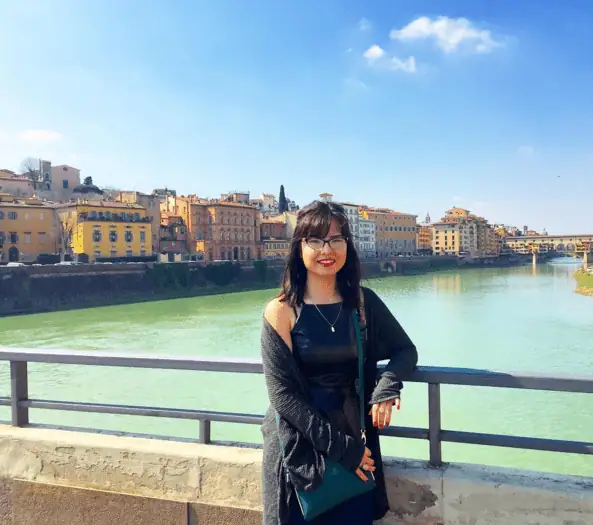
One of my favorite ways to travel abroad was living as an au pair in Italy! There are so many benefits to being an au pair, with a massive benefit being living in a new place and getting to travel to places all around you on the weekends.
If you want to live abroad long-term and have essentials paid for you (accommodations, cell phone, food, and sometimes more), I recommend looking for au pair jobs. You may also get a monthly stipend, language/cultural exchange, public transit card, and sometimes even a car.
You can find au pair jobs on sites like AuPairWorld, AuPair.com, and InterExchange. You can au pair in places all around the world, including Europe, Australia, Asia, and Canada.
Recommended reading: How To Become An Au Pair And Travel The World
9. Pack light
Packing light helps you avoid airline baggage fees and makes moving between destinations easier and cheaper.
Packing light is not just for convenience but also saves money in the long run. You’re saving on luggage bag fees and don’t have to worry about paying for overweight baggage charges.
Packing this way also helps save time while traveling, since you’re hauling around less and you don’t have to wait for luggage. Smaller luggage is easier to carry around when you’re going on trains, buses, and budget airlines.
10. Use public transportation
Public transportation is almost always cheaper than taxis or rideshares, especially in cities.
Using public transportation is a must while traveling, and depending on where you are, it might even be easier to get around than taking a car or taxi. You also don’t have to worry about parking fees or gas. Many cities even have a student public transportation pass, saving you even more money.
I know it can seem a little scary at first if using public transportation is something you are not used to. But it can save a lot of money! For example, a taxi ride might cost $35, whereas a train might cost $3.
11. Find free activities
Free activities help you experience a destination without blowing your budget on tours or attractions.
Even in my 30s, with more money now, my go-to way of traveling is by finding the best free travel activities first.
This includes exploring local parks, rivers, and beaches, as well as going on free walking tours, free entry days for museums, and even going to local festivals and fairs.
I also recommend typing in the city you’re visiting plus “free things to do” on Google. For example, you can type in “Paris free things to do.” A list of places will come up to give you inspiration on where to go and what attractions to see.
12. Find ways to save on food
Food costs add up quickly while traveling, so small changes can save you a surprising amount of money.
The best ways to save money on food while traveling include:
- Eat like a local and visit local spots, not touristy restaurants with overpriced food.
- Cook your own meals at Airbnbs or hostels in the community kitchen. Plus, it’s fun to check out a new country’s grocery store (it’s one of my favorite things to do when traveling).
- Eat street food from street vendors.
- Go to local markets (like farmers markets) and eat like a local.
- Bring snacks with you so that you aren’t forced to pay for expensive food when you get hungry (like granola bars).
- Some restaurants have student discounts, so look out for these.
- If a hostel has complimentary breakfast, it might be smart to book with that hostel.
Recommended reading: 16 Smart Ways To Save Money On Groceries
13. Go camping
Camping can reduce accommodation costs to almost nothing while letting you explore beautiful places.
Yes, buying gear upfront can be expensive, but if you camp a lot, this can save you money in the long run. And, you may also be able to find gear used or free in Facebook groups (like Buy Nothing groups).
Campsites are usually $5 to $30 a night, which is much cheaper than hotels or Airbnbs. There are even plenty of free camping spots that are really beautiful too.
Recommended reading: How To Find Free Camping In The USA & Canada
Frequently Asked Questions
Below are answers to frequently asked questions about how to travel on a student budget without missing out.
How can I travel cheaply as a student?
There are many things you can do to travel cheaply as a student, such as:
- Choose budget accommodations like hostels.
- Look into WorkAway or WWOOF for free stays abroad in exchange for work.
- Try housesitting or petsitting abroad.
- Use BlaBlaCar, which lets you hitch a ride with locals for cheap (I did this and met cool people!).
Is $1,000 enough for a vacation?
$1,000 goes a long way in places like Southeast Asia and Central America. It’s important to spend your money wisely if you want to make it last. But, it can be hard to find airfare for cheap enough to fit into a $1,000 total vacation budget. So, you’ll have to search hard and be flexible.
You can also go camping, and if you already have the gear or if you’re able to get it for free or cheap, then you can probably manage a $1,000 vacation budget as well.
My other best tips to make $1,000 stretch include traveling during off-peak season, using hostels, and prioritizing free activities.
Where is the cheapest and safest place to travel?
The cheapest and safest places to travel include places like Eastern Europe (Poland, Hungary, Slovenia, and the Czech Republic), Southeast Asia (Thailand, Vietnam, Malaysia, and Indonesia), and Central America (Costa Rica, Nicaragua, and Guatemala).
Where to travel when you’re broke?
If you’re broke (like most college students are), you may want to try visiting affordable (yet still beautiful) destinations like Mexico (Mérida, Oaxaca, Puebla, and Guanajuato), Portugal, Albania, Vietnam, or Guatemala.
How I Traveled the World on a Student Budget (Without Missing Out) – Summary
I hope you enjoyed my article on how to travel the world on a student budget.
As you can see, there are many ways to travel for college students on a budget. You can visit all kinds of places without paying for accommodations and sometimes even for food, cell phone, etc., just like I did as an au pair in Italy.
I hope this post was helpful for you and inspires you to visit more places on a budget!
Where do you want to travel to?
Recommended reading:
- How To Travel On A Budget And Still Have The Time Of Your Life
- 17 Best Seasonal Jobs That Pay Well
- 18 Best Cruise Ship Jobs To Travel the World and Make Money
- How We Retired At 29, Travel, And Keep Our Expenses Low
- How I’ve Traveled Full Time For 20 Years (And Make/Save Money)
The post How I Traveled the World on a Student Budget (Without Missing Out) appeared first on Making Sense Of Cents.

