
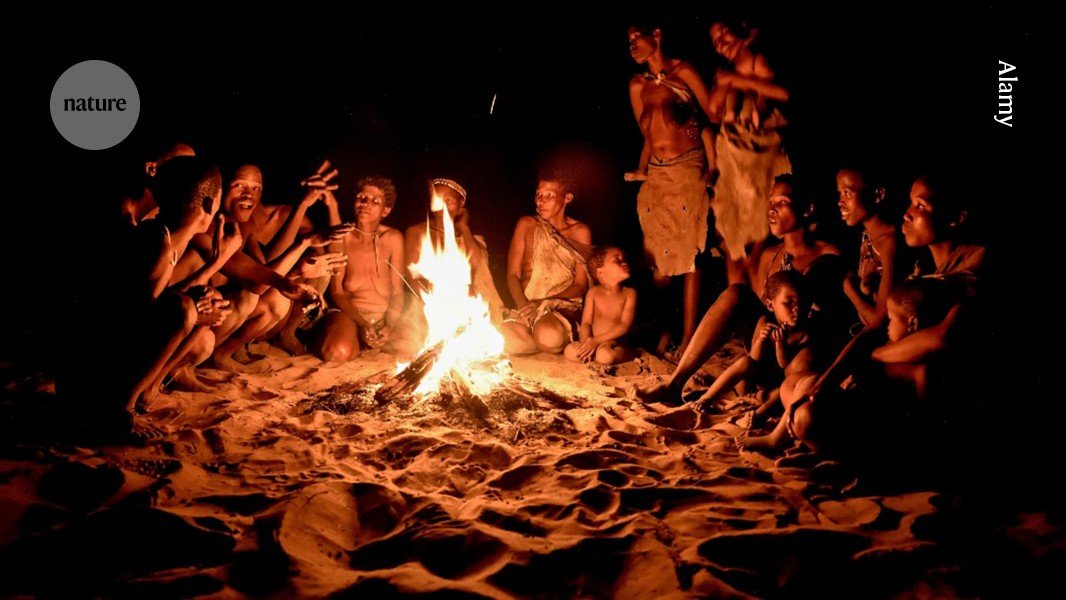
The Sleepless Ape: The Story of Sleep in Human Evolution David R. Samson Princeton Univ. Press (2026)

Sleep deprivation disrupts memory: here’s why
For millennia, philosophers have argued over why humans sleep and dream. In his fourth-century-bc treatise On Sleep and Sleeplessness, the philosopher Aristotle argued that sleep is a necessary, natural suspension of consciousness that allows the body and soul to recover.
This view fell out of fashion during the Age of Enlightenment in the late seventeenth century. The philosophers John Locke and David Hume, for example, thought that sleep hindered rationalism and the pursuit of knowledge. Hume lumped sleep together with fever and madness as an impediment to rational thought. Locke saw sleep as a regrettable, if unavoidable, disruption of God’s desire for humankind to be rational and industrious. The essayist Jonathan Crary put this view more succinctly — “sleeping is for losers” — when he wrote about how sleep is often devalued in modern society1.
Modern science, meanwhile, has increasingly come to echo Aristotle. It provides a chorus of evidence about the importance of sleep for a host of crucial functions, including cognition, emotional regulation, immunity, metabolism and social bonding. Sleep is essential for cleansing the brain of metabolic waste, trimming synapses and maximizing the efficiency of cognitive processing.
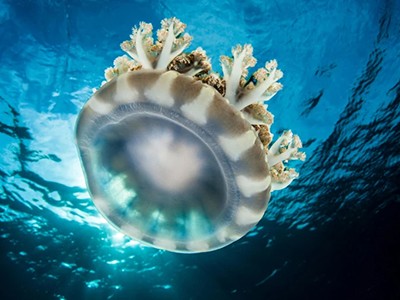
Jellyfish sleep like humans — even though they don’t have brains
Enter David Samson, a biological anthropologist at the University of Toronto in Canada, asking a provocative question: why, if sleep has so many benefits, do humans as a species sleep so little?
By studying sleep patterns across closely related species, he estimates that humans require roughly 9.5 hours of sleep per day to fulfil their basic biological needs. Yet, averaged across cultures, people get just under seven hours a day2. Samson dubs this 2.5-hour discrepancy the “human sleep paradox” and makes it the central topic of his book, The Sleepless Ape.
To explain it, Samson argues that natural selection favoured short but high-quality sleep when our ancestors shifted from sleeping in trees to sleeping beneath them. Exposure to predators when sleeping on the ground led hominins to condense their rest into shorter, deeper bouts that prioritized restorative rapid-eye-movement (REM) sleep — with the happy by-product of more waking hours for foraging, social interaction and learning to use tools. This idea, which Samson calls the sleep intensity hypothesis, underscores the opportunity costs associated with prolonged sleep. Hume and Locke would have nodded their approval.

How to get the best night’s sleep: what the science says
Samson bolsters his argument with diverse lines of anthropological evidence. These include findings from his own fieldwork with wild chimpanzees (Pan troglodytes) at the Toro-Semliki Wildlife Reserve in Uganda and two hunter–gatherer populations, the Hadza in Tanzania and the BaYaka in the Republic of Congo. Samson’s early work documented chimpanzees’ nightly construction of arboreal ‘nests’ — sleeping platforms assembled from springy branches, stems and leaves that provide stability, thermoregulation and protection from predators and parasites.
This propensity for nest-making is shared by the other great-ape species: orangutans (Pongo spp.), gorillas (Gorilla gorilla) and bonobos (Pan paniscus). Samson argues that it is much more than a quirky habit. He views it as a pivotal innovation that reshaped the trajectory of primate evolution and, ultimately, led to humans’ preference for sheltered sleep. In the words of primatologists Barbara Fruth and Gottfried Hohmann, whom Samson quotes in the book, nest-making was a “cradle for higher cognition, manipulation and technological skills”.
I agree with this characterization. But the book does not mention what might be an important piece of the puzzle: the aye-aye (Daubentonia madagascariensis). This is a minor sin of omission, but these cat-sized nocturnal animals also make elaborate nests from scratch — the only other primates to do so. They also have the largest brain of all lemurs relative to their body size. The aye-aye’s sleep architecture is virtually unexplored, and the species would provide a valuable out-group for testing the links between nest building and enhanced cognition.
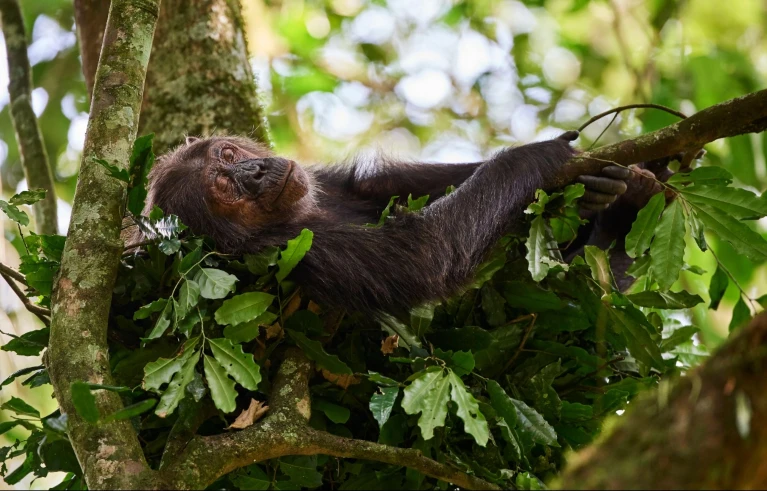
Nest-building behaviour in great apes marks a pivotal point in primate evolution.Credit: Eric Baccega/NPL/Alamy

