
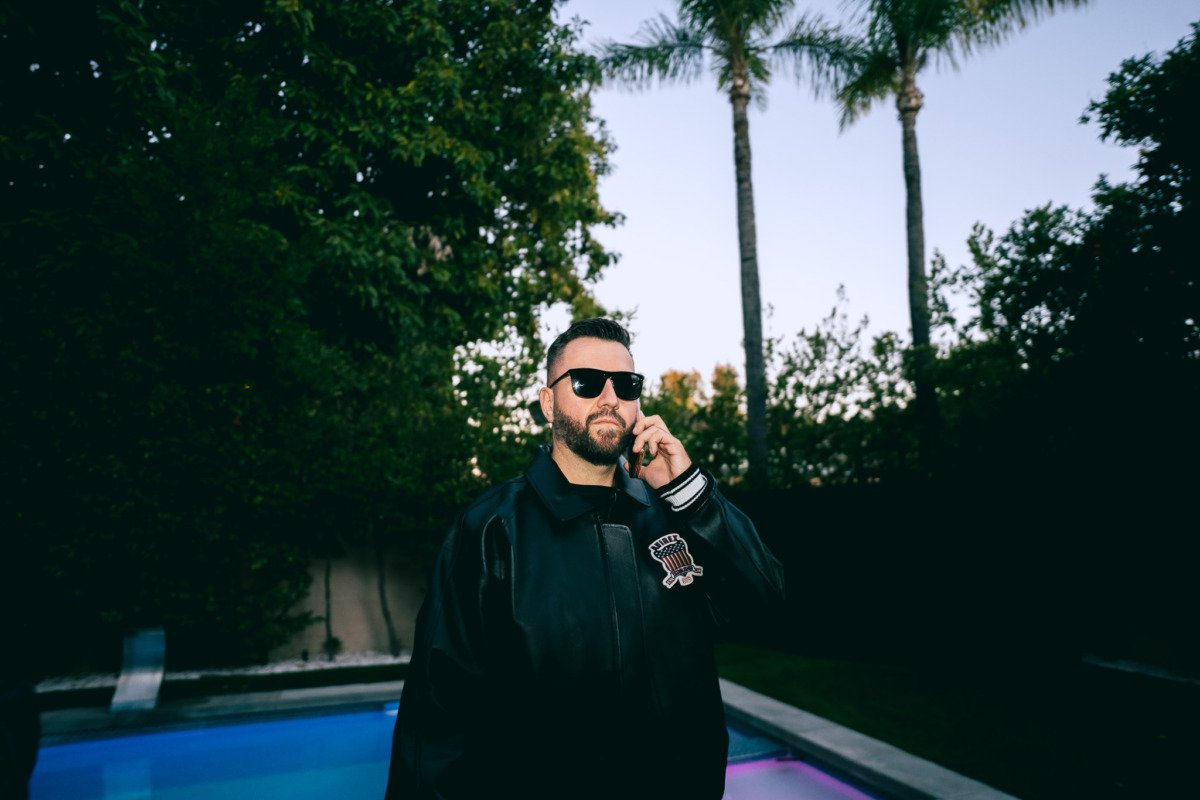
Breaking into the American music market is one of the hardest things an international artist can do, and few people have built a career out of it quite like Mac Rogan. The founder and CEO of 2NIGHT Management, Rogan has spent his life turning overlooked talent from outside the United States into festival headliners. He has steered major international tours for clients including Matroda, San Pacho, and TWO LANES, putting his artists on some of the most prestigious stages in the world, from the Hollywood Palladium, Brooklyn Mirage, and Red Rocks to festivals like Coachella, EDC Las Vegas, and Tomorrowland. That track record has made him one of the most sought-after managers in dance music.
What started as a teenager promoting hip-hop shows in Slovenia, a country with almost no music industry to speak of, has grown into a global company with headquarters in Europe and Los Angeles. Rogan built it all on one belief, that where an artist comes from should never limit how far they can go.
In this conversation, Rogan reflects on his journey from a 15 year old booking international acts to the head of one of dance music’s most ambitious management rosters. He shares how he got his start, the artists he has helped build, and where he wants to take 2NIGHT next.
JACK ROLLINS: Let’s start at the beginning. How did you first get into the music industry growing up in Slovenia?
MAC ROGAN: Music was always part of my life, but at first only from a listener’s perspective. One day a friend gave me Public Enemy’s “It Takes a Nation of Millions to Hold Us Back,” and that was it. I was hooked. Back then it was hard to get international CDs into the country, so soon after I started making mixtapes and selling them, all on the black market. That was my introduction to both music and the music business.
JACK ROLLINS: You moved from promoting hip-hop shows into electronic music pretty early. What pulled you toward dance music?
MAC ROGAN: When I was around 15, I started promoting hip-hop events and bringing international artists like KRS-One, Raekwon, Proof, and Gang Starr to Slovenia. The market was small and limited, so it was hard to make any money promoting hip-hop shows. Around that time, the electronic scene was growing fast internationally, and I was fascinated by the culture, the energy, and the scale of it. With experience promoting events already, I decided to organize my first electronic music event, and it turned out to be a success. In the years that followed, I brought artists like Sebastian Ingrosso, Sander van Doorn, Moby, and Derrick May to Slovenia for the first time. From that point on, I was drawn to everything around dance music.
JACK ROLLINS: You founded 2NIGHT Management at 18. What made you want to move from promoting shows into managing artists?
MAC ROGAN: While promoting electronic events, I kept meeting local producers who had the music but lacked structure, strategy, and international direction. One of them was Beltek, a really talented producer who would become my first management client. Promoting events taught me a lot about the live business, marketing, and audience building, but over time I became more interested in helping artists build sustainable careers instead of focusing on one-night events. Working with Beltek led me naturally into management, and eventually to launching 2NIGHT Management when I was 18.
JACK ROLLINS: Your roster includes names like Matroda and San Pacho. What is your approach when you take on an artist and start building their career?
MAC ROGAN: For me, everything starts with the music and the energy around the artist. I look for people who are forward-thinking and creating something genuinely unique rather than copying what is already out there. That was the case with both Matroda and San Pacho. Music is the foundation, but in today’s market that alone is not enough. We focus heavily on identity, consistency, touring strategy, branding, and building authentic connections with fans. I always look at artists as long-term global projects rather than short-term hype. A big part of our work is also understanding how to position international artists in each region of the world.
JACK ROLLINS: Helping Matroda grow into a headliner who can sell 8,000 tickets in Los Angeles is a major milestone. Can you walk us through how that came together?
MAC ROGAN: I started working with Matroda when he was a resident DJ in Croatia, playing for under $50 a night. I quickly realized how exceptional his talent was as a producer. His music felt unique and distinctive while keeping a high production quality. We put together a short-term plan and a long-term plan and followed them. It was not a smooth journey. Just as we started to gain momentum, COVID hit and forced us to rethink our strategy and almost start all over again. We approached everything strategically, from releases and touring to market growth and fan engagement. The U.S. became a major focus very early because we believed the project had global potential. Over time, the audience kept growing organically through the records, social media, and a real connection with fans. We were also fortunate to build a strong booking team around him, especially for North America. His agent, Ferry at CAA, has been an important partner in developing our tour strategy. Selling more than 8,000 tickets in Los Angeles this past December was a major milestone, but for us it was simply the result of years of consistent work, built step by step. And we know we are only getting started.
JACK ROLLINS: A lot of your work is about breaking non-American artists into the States. Why do you think that market is so hard to crack, and what do you do differently?
MAC ROGAN: Coming from Slovenia, a country of 2 million people with very little music scene, I had no other option but to go international. I went straight into the U.S. market without really knowing how it worked, but it worked out. It is the largest market in the world with intense competition, so everything has to be at a very high level to crack it. That is exactly what motivates me. From day one, our goal is to build our artists into hard ticket sellers. That is the key for us, and it is hard, especially in electronic music. The music, the branding, and the whole story around the artist all matter when you are building a strong fan base. Once that fan base is there, the artist can do real hard ticket business. We also pay close attention to the new generation of fans and where the trends are going.
JACK ROLLINS: Lastly, what are your future goals for 2NIGHT Management?
MAC ROGAN: Having fun and enjoying music has been my motto from day one. We have built the best group of people at 2NIGHT, and I am grateful for them every day. Our team is the best. The goal is to keep building 2NIGHT Management into one of the leading artist management companies in electronic music while holding on to our unique approach. We are always on the lookout for fresh producers. We want to keep discovering and building international talent, especially artists from markets outside the traditional industry hubs. We recently expanded the roster with new artists like Ragie Ban, Greg 99, Blaise Bracic, Mati Astroza, and Pedroz. At the same time, we stay focused on helping our existing artists reach new levels through tours, major festivals, strategic brand opportunities, and continued global growth.
From selling mixtapes out of Slovenia to filling rooms across America, Rogan has built his career on a refusal to let borders set an artist’s ceiling. As 2NIGHT Management keeps growing, he stays focused on the thing that started it all, finding talent the rest of the industry overlooked and giving it a path to the world stage.

